
Will Valvoline follow Jiffy Lube to a sale? Our answer is no.
The oil majors are leaving chemicals, and lubricants are part of the same exit. Valvoline is the one name left that looks like Jiffy Lube: a chain of quick oil-change shops. It is buying, not selling.
By Dr. James S. Puckace
Founder, Bluetigre Consultants LLC · 17 November 2026
The majors are selling
In two years we count six petrochemical sales done or signed: Shell's Singapore park, LyondellBasell's four European sites, SABIC's European petrochemicals ($500 million) and its engineering plastics ($450 million), and control of Braskem. Three more are in play, led by Shell's US chemicals, including Monaca, at about $8 billion. Five European crackers closed because no buyer came.
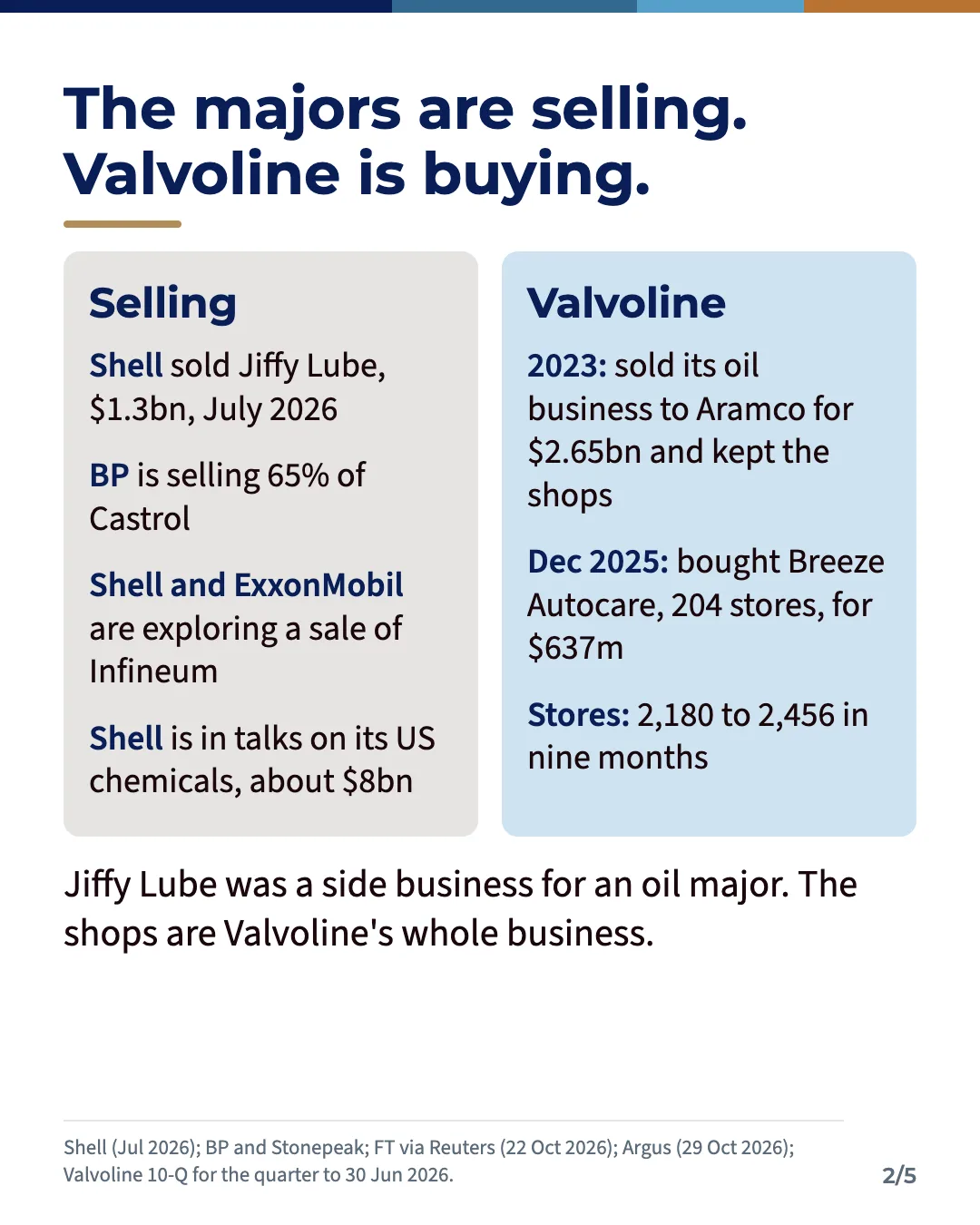
Lubricants are part of the same exit. Shell sold Jiffy Lube for $1.3 billion in July. BP is selling 65% of Castrol. Shell and ExxonMobil are exploring a sale of Infineum.
So is Valvoline next? Our answer is no, for four reasons.
Four reasons Valvoline is not a seller
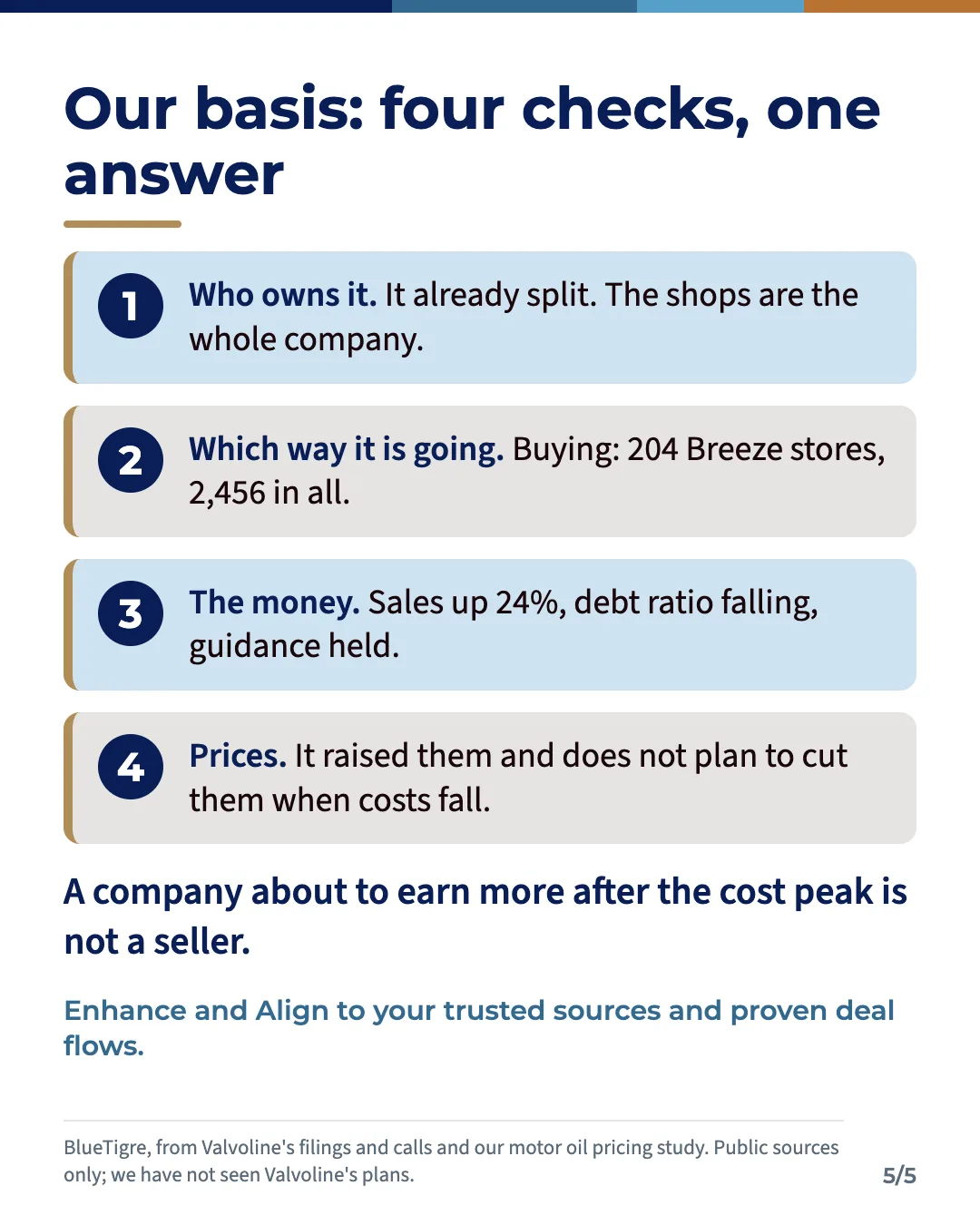
- It already split. Jiffy Lube was a side business for an oil major cutting back. In 2023 Valvoline sold its oil business to Saudi Aramco for $2.65 billion and kept the shops. The shops are now the whole company.
- It is buying, not selling. In December 2025 it bought Breeze Autocare, 204 stores, for $637 million. It ran 2,456 stores at the end of June, up from 2,180 nine months earlier.
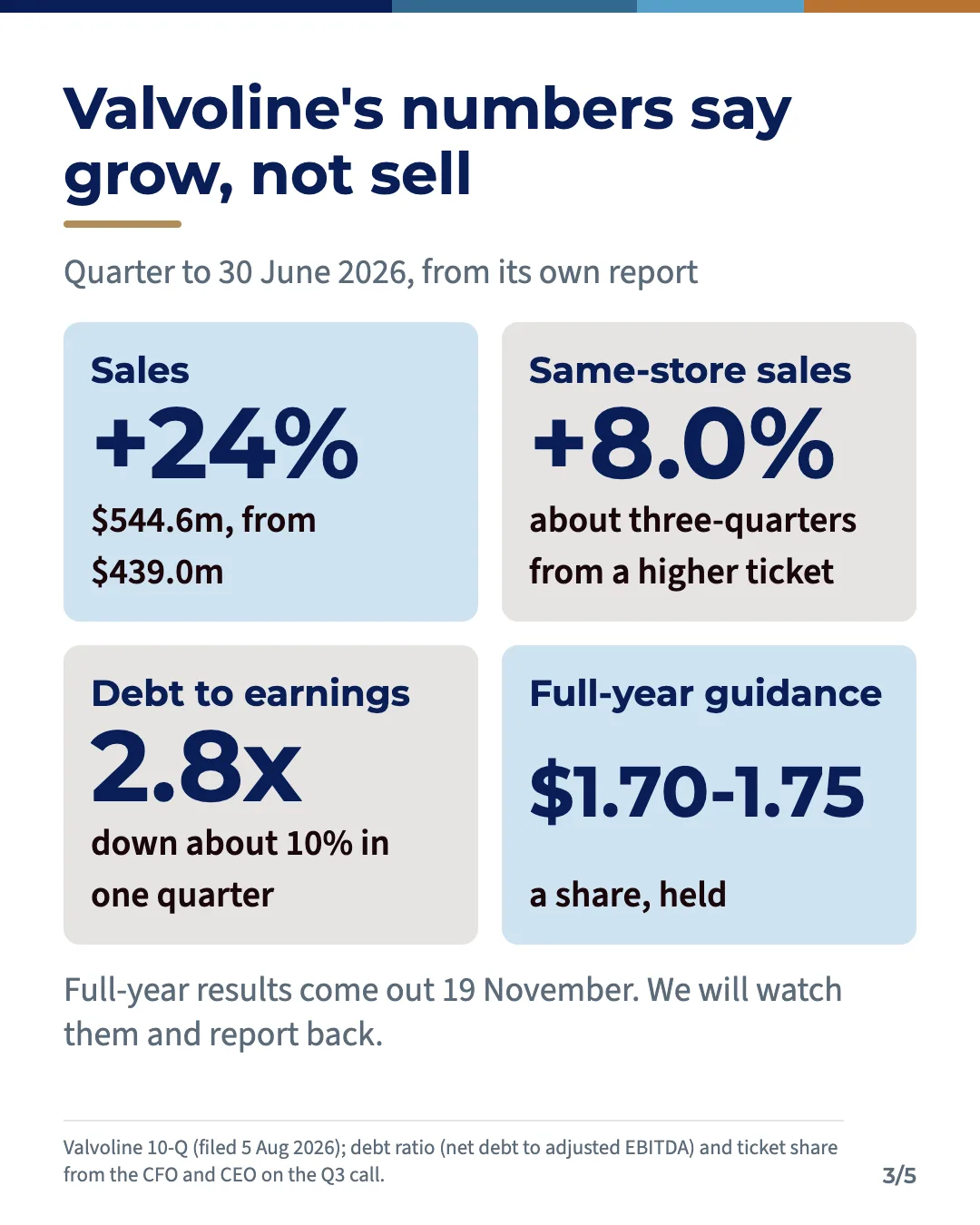
- The money is moving the right way. In the quarter to June, sales rose 24% to $544.6 million and same-store sales rose 8%. Debt fell to 2.8 times earnings, down about a tenth in one quarter. Full-year guidance held at $1.70 to $1.75 a share.
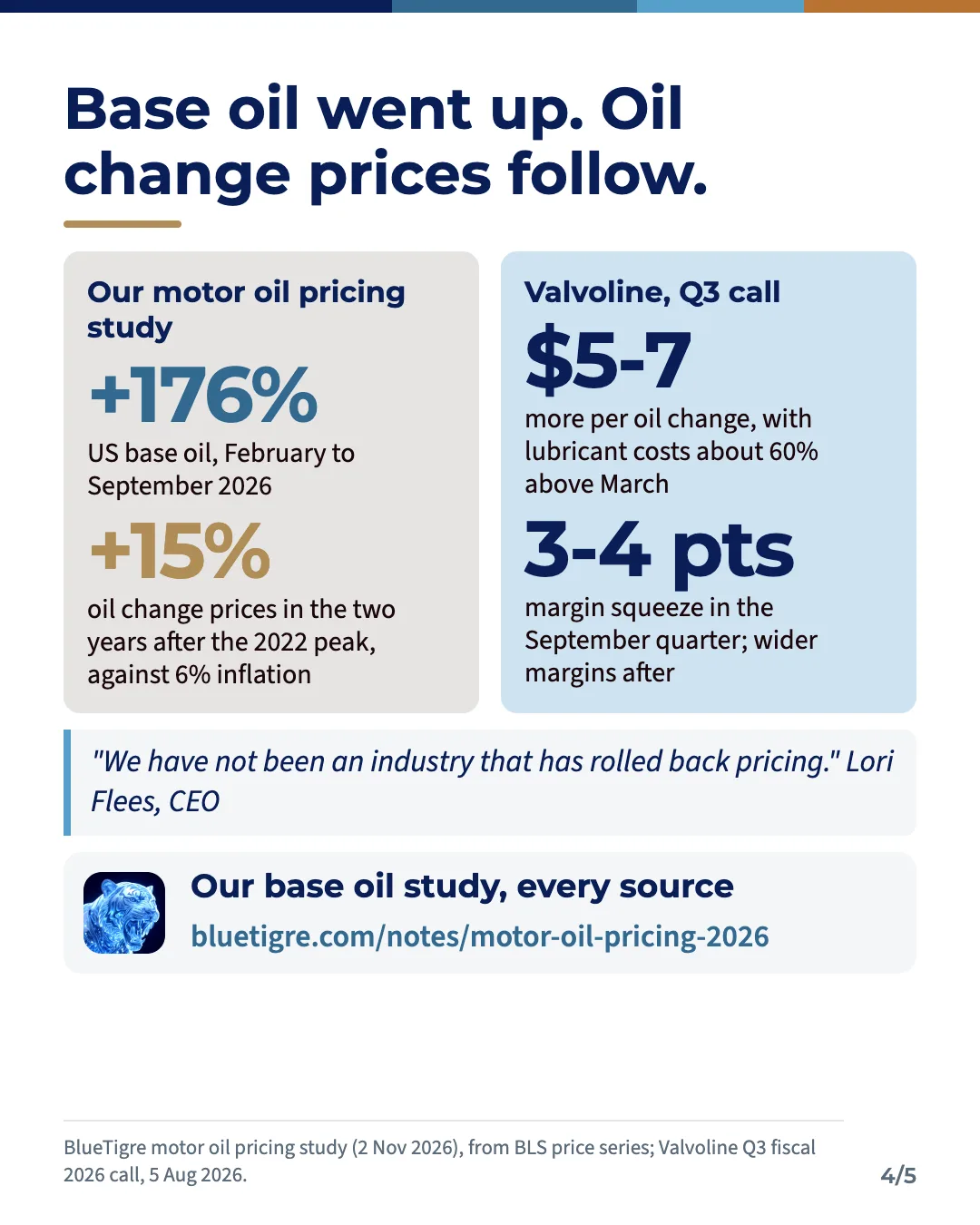
- It is raising prices, and they will stay up. Our motor oil pricing study found US base oil up 176% from February to September. After the 2022 peak, oil change prices rose 15% in two years against 6% inflation. Quick-lube chains have the most pricing power, and they use it after the cost peak. Valvoline is doing exactly that. It expects $5 to $7 more per oil change, and its CEO said: "We have not been an industry that has rolled back pricing." The squeeze comes first, 3 to 4 points of margin in the September quarter. Wider margins come after.
A company about to earn more after the cost peak is not a seller.
What it means
- Valvoline: a buyer with debt to pay down.
- Oil blenders: one more shop chain choosing its oil. Approvals open that door; price and supply keep it open.
- Fund buyers: the shops for sale are the majors' side businesses, not Valvoline.
What we said we would watch
Valvoline was due to report its full-year results on 19 November. We said we would check three things: whether the margin squeeze came in at 3 to 4 points, whether the higher prices held, and whether debt kept falling. It reported on 19 November, and the results back the call.
The slides
One limit. We read Valvoline's filings and calls, not its plans. A buyer could always come knocking.
Sources
- Valvoline, quarterly report for the quarter to 30 June 2026 (10-Q, filed 5 August 2026) and its results filing of 5 August 2026; the CEO and CFO on the results call, 5 August 2026.
- SABIC's sales: Asharq Al-Awsat and The Chemical Engineer. LyondellBasell's European sites: ChemXplore. Braskem: Bloomberg, 20 April 2026.
- Shell's US chemicals: Argus, 29 October 2026 and Hydrocarbon Engineering. Closures and sales across Europe: Reuters factbox, via Yahoo Finance.
- Jiffy Lube: Shell, July 2026. Castrol: BP and Stonepeak. Infineum: the Financial Times, via Reuters, 22 October 2026.
- Base oil and oil change prices: BlueTigre motor oil pricing study, 2 November 2026, from US Bureau of Labor Statistics price series.
We report figures only as the sources state them, with the date and who said it. Public sources only; we have not seen Valvoline's plans.
Enhance and Align to your trusted sources and proven deal flows.
One email per new deal watch or study. Leave any time.